There is a reason checklists continue showing up in high-performance industries like aviation, medicine, and finance. They create consistency. When conversations, follow-ups, and workflows become more structured, fewer opportunities fall through the cracks.
For agents, that consistency matters more than ever. Between prospecting, lead follow-up, appointments, applications, reviews, and ongoing client communication, it becomes easy for small but important steps to get overlooked.
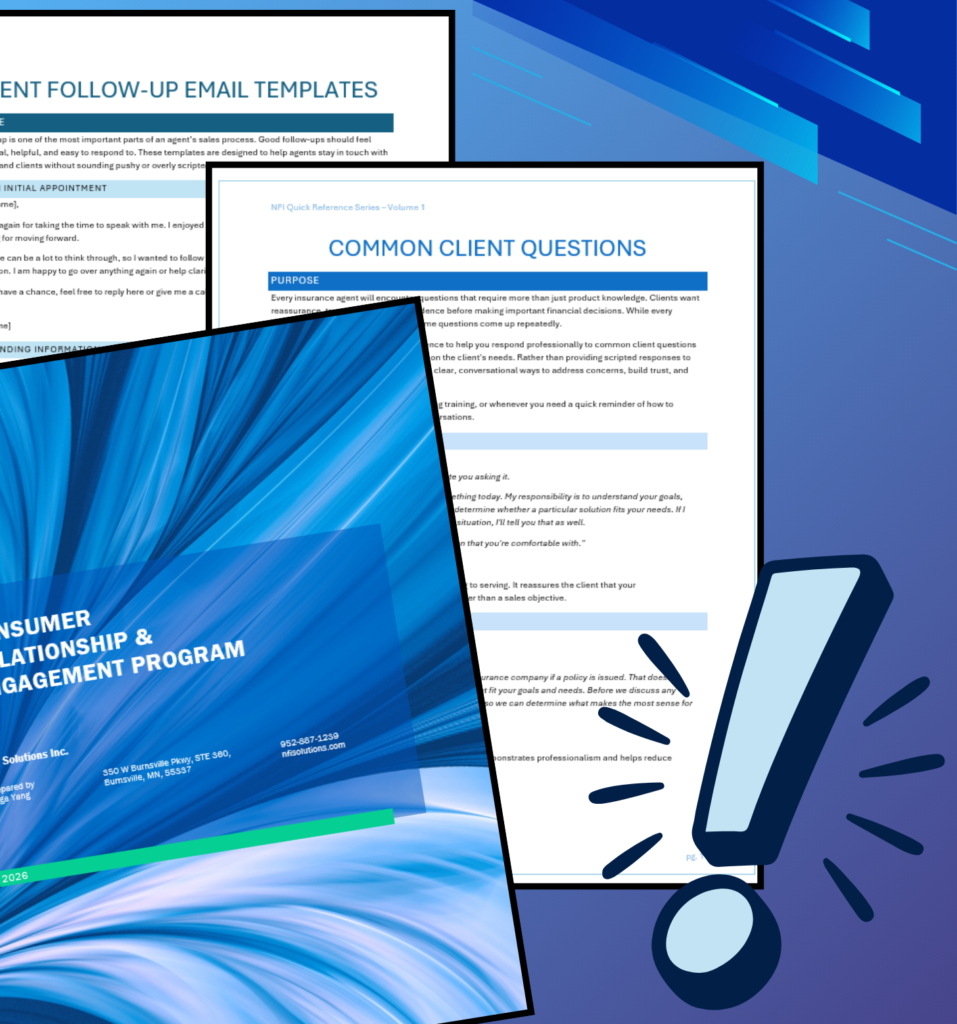
That is exactly why NFI Solutions is releasing a new set of agent checklists designed to help agents create better client conversations, improve organization, and build more repeatable business growth from start to finish.
These are not generic reminders. They are structured resources meant to guide agents through the actual client process in a practical way.

Why Checklists Work So Well in Client-Focused Businesses
One of the biggest misconceptions about checklists is that they are only useful for organization. In reality, they improve communication, consistency, and client confidence.
Research from Harvard Business Review shows that structured workflows reduce avoidable errors while improving overall performance in complex professional environments https://hbr.org
In insurance and retirement planning, conversations can move quickly. Important details can get skipped unintentionally, especially when agents are balancing multiple clients and follow-ups at once.
Checklists help simplify that process. Instead of relying entirely on memory or routine, agents have a repeatable framework that keeps conversations and next steps moving forward clearly.
That consistency creates a smoother experience for both the agent and the client.
Helping Agents Create Better Lead Conversations
One area where checklists can make a major impact is lead generation.
Many agents know they should be networking, following up, staying visible, and creating touchpoints, but without structure, those activities become inconsistent. Over time, inconsistency leads to unpredictable pipelines.
Research from the Journal of Marketing highlights that consistent engagement and repeated visibility significantly improve trust and consumer responsiveness in service-based industries https://journals.sagepub.com
The new NFI checklists are designed to help agents organize those activities into a clearer process. Instead of wondering what to do next, agents can follow structured steps for prospecting, outreach, follow-up timing, educational conversations, and relationship-building.
That creates momentum. More importantly, it creates repeatability.
Keeping Client Conversations More Organized
Client conversations can also benefit heavily from structured guidance.
One of the biggest reasons sales stalls is because conversations lose direction. Key concerns may not be fully addressed, follow-ups may not get scheduled properly, or the client may leave without complete clarity on next steps.
According to research from the CFA Institute, communication clarity and structured engagement play a major role in client confidence and long-term trust https://www.cfainstitute.org
Checklists help eliminate some of that uncertainty. They guide agents through important parts of the conversation process, from fact-finding and identifying concerns to setting expectations and maintaining communication after the appointment.
This is especially valuable for newer agents, but even experienced producers benefit from having systems that keep processes organized and consistent.
Why Structure Creates More Confidence
One of the more overlooked benefits of checklists is confidence.
When agents have a repeatable process, conversations tend to feel smoother and more natural. There is less uncertainty about what should happen next, which allows the agent to focus more on the client instead of trying to mentally manage every detail.
Research published by the National Bureau of Economic Research suggests that structured systems improve decision-making confidence and reduce cognitive overload in professional environments https://www.nber.org
That confidence also transfers to clients. When meetings feel organized and intentional, clients tend to feel more comfortable with the overall process.
In many cases, professionalism is communicated just as much through structure as it is through product knowledge.
Helping Agents Maintain Relationships After the Sale
Another important area these checklists address is client retention.
Many agents focus heavily on generating new business but struggle with maintaining consistent communication after the sale. Over time, that can weaken relationships and reduce referral opportunities.
Strong retention usually comes from simple, repeatable habits. Follow-up schedules, review reminders, educational touchpoints, and ongoing communication all contribute to stronger long-term relationships.
Research from McKinsey & Company shows that consistent engagement significantly improves customer loyalty and long-term retention across financial services industries https://www.mckinsey.com
The goal is not to overwhelm clients with communication. It is to remain visible and valuable over time.
Checklists help agents stay proactive instead of reactive.
Creating a More Repeatable Business Model
One of the biggest advantages of using structured systems is scalability.
Agents who rely entirely on memory or instinct often struggle to grow consistently because processes change from client to client. Structured checklists help create a more repeatable business model.
That does not mean conversations become robotic. It means important steps are less likely to be missed.
As business grows, repeatable systems become increasingly valuable because they help maintain consistency even as workloads increase.
Over time, this can improve efficiency, placement rates, retention, and referral generation all at once.
Where Agents Can Access the New NFI Resources
The goal behind these new NFI checklists is simple. Help agents create stronger conversations, stay organized, and build more consistent long-term growth.
From lead generation and client communication to follow-up structure and relationship management, these resources are designed to support agents through the entire client process rather than just individual sales moments.
NFI agents can now access additional information, tools, and checklist resources directly through the Agent Hub. As more resources continue rolling out, the Agent Hub will serve as a central place for agents to find practical business-building tools designed to support real day-to-day growth and client engagement.